Root Canal Treatment
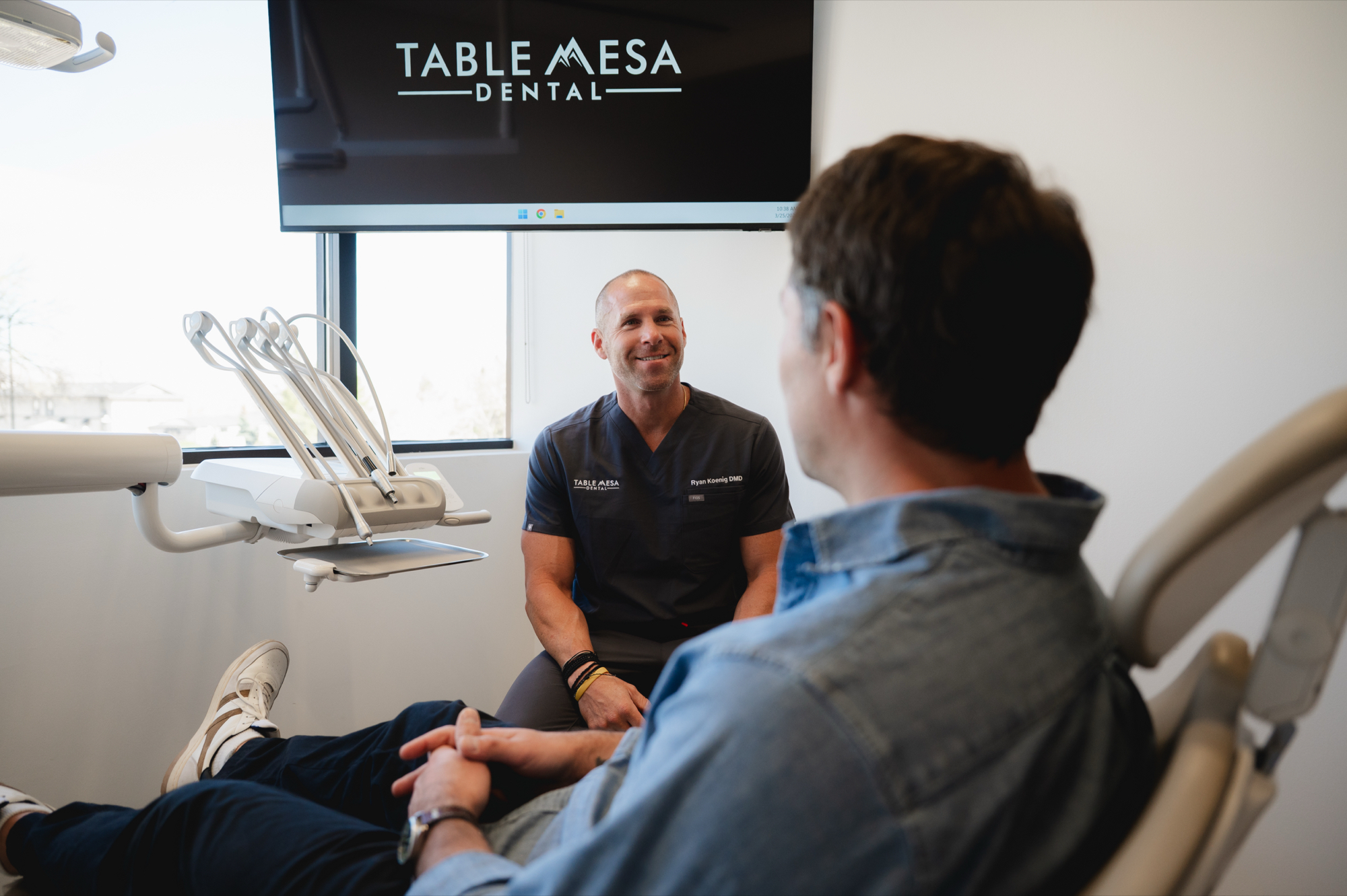
Root Canal Treatment in Boulder, CO
A root canal has one job: stop the pain and save your tooth. When decay, a crack, or an injury lets infection reach the nerve, Dr. K and the team at Table Mesa Dental clean out that infection, seal the tooth from the inside, and rebuild it so you can chew and smile normally again. Often that rebuild is a same-day crown, so the tooth is protected before you leave. Most people are surprised by how uneventful it feels, and most walk out with the ache that brought them in already gone.
If the idea of treatment makes you tense up, tell us. Nitrous oxide, oral conscious sedation, and IV sedation dentistry are all options here, and they're a big part of how we keep appointments calm.
If a tooth is throbbing, sensitive to heat, or tender to bite on, call us at (303) 590-3992 or request an appointment and we'll get you in.
Quick Takeaways
- Treatment usually takes 60 to 90 minutes, and many teeth can be finished in a single visit.
- Ask about sedation before you book if dental visits make you anxious. We offer three levels, and Dr. K has advanced training in IV sedation.
- Plan on a crown afterward for most back teeth, since a treated tooth is more brittle. Our CEREC same-day crown technology often handles that without a temporary.
- Don't wait out the pain. Infection inside a tooth doesn't resolve on its own, and delaying usually shrinks your options from "save the tooth" to "remove the tooth."
- Bring your insurance details. We'll go over the estimate before anything gets scheduled — reach out to our Boulder office with questions ahead of time.
How a Root Canal Actually Works
1. Exam and digital X-rays
A thorough exam plus digital X-rays (and cone beam imaging when we need a 3D view of the roots) shows us how far the infection has traveled and whether a root canal is the right call. Sometimes the answer is something simpler, like the routine care we cover under general dentistry, and sometimes it's an extraction. You'll hear the reasoning either way.
2. Getting you numb and settled
We numb the tooth and surrounding tissue with local anesthetic, then check that you're fully comfortable before we begin. If anxiety is the real hurdle, this is where sedation dentistry comes in. Nitrous oxide takes the edge off, oral conscious sedation goes further, and IV sedation is there for patients who'd rather be deeply relaxed throughout.
3. Cleaning and sealing the inside of the tooth
Through a small opening in the top of the tooth, we remove the inflamed or infected pulp, then clean, shape, and disinfect the narrow canals inside each root. Once they're dry, we fill them with a biocompatible material and seal them so bacteria can't move back in. This is the moment the pressure and throbbing you came in with usually let go.
4. Rebuilding the tooth
A tooth with a hollowed-out center needs protection. Depending on how much healthy structure is left, we finish with a filling or prepare the tooth for a crown. With CEREC, we design and mill a custom same-day crown in-house, so many patients leave with the permanent restoration already in place instead of a temporary and a return trip.
Why Saving the Tooth Is Worth It
- The pain stops. Removing the infected nerve tissue takes away the ache, the heat sensitivity, and the pressure.
- You keep your own tooth. Nothing functions quite like natural tooth structure and roots already anchored in your jaw. Even a well-planned dental implant is a replacement, not the original.
- Your bite stays where it belongs. Losing a tooth lets neighboring teeth drift and tip, which changes how you chew and complicates future treatment.
- The infection stops spreading. Left alone, it works into the bone around the root and can build into an abscess or visible swelling.
- You chew normally again. With a same-day crown on top, a treated molar handles everyday eating.
- It lasts. With a well-sealed root canal, a solid restoration, and regular checkups, a treated tooth can serve you for decades.
Who Root Canal Treatment Is Right For
A root canal is the answer when the nerve inside a tooth is inflamed or infected but the tooth itself is still structurally sound. Common signs: lingering pain after hot or cold, tenderness when biting down, a dull ache that wakes you up, swelling or a bad taste near the gumline, or a tooth that's darkened after an old injury. Sometimes there's no pain at all and we spot it on an X-ray. If nerves have kept you from having it looked at, our sedation options range from nitrous oxide to IV sedation. Once treated, the tooth usually needs a crown to protect it, and we make those here with a same-day crown so you're not waiting weeks in a temporary.
Not every tooth can be saved. If a crack runs into the root, if too little tooth remains above the gum, or if the bone support is badly compromised, we'll tell you plainly rather than putting you through treatment that won't hold. In those cases we talk through extraction and replacement, which for many patients means a dental implant, and Dr. K handles the surgical side of that here as well. Teeth treated elsewhere that flared up again may be candidates for retreatment or a small root-tip procedure called an apicoectomy.
Timeline and What to Expect
- Day of treatment: plan on 60 to 90 minutes for a single tooth. Molars have more canals and can run longer. If sitting that long makes you uneasy, ask us about sedation dentistry beforehand.
- One visit or two: straightforward cases are often finished in one appointment. Heavily infected teeth or complicated root anatomy sometimes need a second visit.
- First 48 hours: mild soreness when biting is normal as the ligament around the root settles down. Over-the-counter pain relievers usually handle it.
If your crown is milled the same day with our same-day crown technology, you're done. If a separate appointment is needed, we'll schedule it promptly so the tooth isn't left unprotected. Once the final restoration is in, we keep an eye on the tooth at routine general dentistry checkups.
Preparing for Your Visit and Caring for the Tooth Afterward
Beforehand, eat a normal meal unless you're having sedation, in which case we'll give you specific instructions about food, medications, and arranging a ride home. Bring a current list of your medications, and if you're already on an antibiotic for the tooth, keep taking it as prescribed. Tell us if you're anxious. It changes how we pace the appointment.
Afterward, take it easy on that side until the final restoration is in place, since an unprotected tooth can fracture. In many cases we can design and place a same-day crown so the tooth isn't left vulnerable for long. Brush and floss the area normally to help healing. Soreness that gradually improves over a few days is expected. Swelling, pain that intensifies, or a bite that suddenly feels off is worth a call, so reach out to our Boulder office and we'll get you in.
Cost and Payment
What a root canal costs depends on which tooth it is, how many canals it has, whether it's been treated before, and what restoration it needs afterward, such as a same-day crown. After the exam and X-rays, we'll give you a written estimate covering the treatment and the crown or filling, walk through what your insurance is expected to cover, and go over your payment options. We accept many dental insurance plans and offer an in-house membership plan for patients without coverage, which also applies to routine general dentistry visits. You'll know the numbers before you agree to anything , get in touch and we'll get you scheduled for that first look.
Why Patients Choose Table Mesa Dental for Root Canals
Dr. Ryan Koenig, DMD brings more than twenty years of practice and over 1,000 hours of continuing education to this work, with advanced training in IV sedation, implants, oral surgery, and full-mouth reconstruction. That matters for root canals specifically: if a tooth turns out to be unsavable, or if you need real sedation to get through treatment, it's handled by the same team in the same building rather than referred out and rescheduled.
The imaging and the crown milling happen here too, not at a lab across town. Just as much of the reason people stay with us is the feel of the place: our team leads with empathy, explains what's happening as it happens, and doesn't rush you. Many patients arrive after years of putting off a tooth they knew needed attention. No lectures here. We just get it fixed.
Frequently Asked Questions
Does a root canal hurt?
The treatment itself is typically painless. Between local anesthetic and modern instruments, most patients say it feels like getting a filling. The tooth is often what hurt, and that pain eases once the infected tissue is out. Mild tenderness for a few days afterward is normal and usually responds to over-the-counter pain relievers. If dental anxiety is the bigger hurdle, ask us about sedation dentistry options.
How much of my tooth is left afterward?
Most of the outer tooth stays intact. We access the pulp through a small opening in the top, so how much structure remains depends mostly on the decay or damage that existed before treatment. Because the tooth becomes more brittle without its inner tissue, back teeth are usually crowned to prevent cracking.
Can a root canal be finished in one day?
Often, yes. When the infection is straightforward and the canals cooperate, we finish in one appointment, and same-day crown technology means the restoration can often be done that same visit. Complex root anatomy or significant infection may call for a second visit, and we'll tell you which after the exam.
What happens if I just leave it alone?
The pain often quiets down on its own, which fools people into thinking the tooth healed. What actually happened is that the nerve died. The bacteria keep working outward into the bone, and the tooth is usually lost in the end. Treating it early is almost always simpler and less expensive.
Should I get a root canal or just pull the tooth?
Look at the full cost, not just the day-of cost. Extraction is faster and often cheaper up front, but the bone in that spot shrinks once the root is gone, neighboring teeth shift, and replacing the tooth with a dental implant or bridge typically runs more than the root canal would have. When a tooth is restorable, keeping it is usually the better long-term choice. When it isn't, we'll say so and go over replacement options.
Will I need antibiotics?
Sometimes. If there's active swelling or the infection has spread beyond the tooth, antibiotics help control it, but they can't reach inside the tooth, so they can't cure the problem. Cleaning out the canal is what actually resolves it.
Let's Get That Tooth Comfortable Again
You don't have to keep living around a tooth that hurts. Whether the pain started last week or you've been ignoring a nagging molar for a year, we'll take a look, tell you what we see, and lay out your options in plain language, from a same-day crown to dental implants, with sedation if nerves are part of the picture. Call Table Mesa Dental at (303) 590-3992 or reach out here. We're on South Broadway in south Boulder, open Monday through Friday.
Share
Your Story