Tooth Extractions
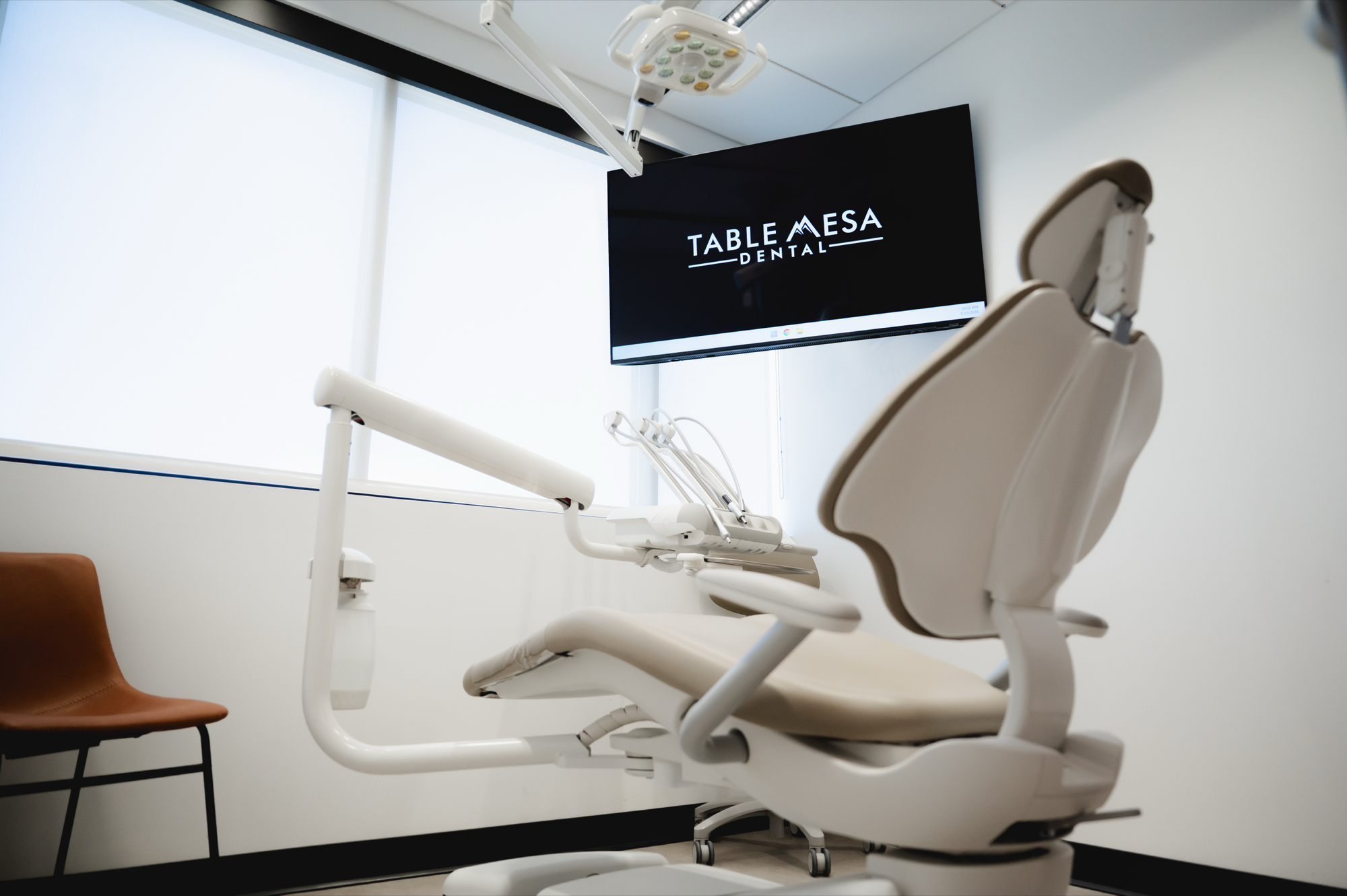
Tooth Extractions in Boulder, CO
Sometimes a tooth reaches the point where saving it does more harm than letting it go. When that happens, Dr. Koenig and the team at Table Mesa Dental remove it carefully, comfortably, and with a plan already in place for what comes next. Most extractions take 30 to 60 minutes, you'll be thoroughly numbed the whole time, and the majority of our patients are feeling much more like themselves within a few days.
We handle extractions in-house, including same-day appointments when a tooth is causing real pain and waiting isn't an option. If you're hurting right now, call us at (303) 590-3992 and we'll get you seen.
Quick Takeaways
- An extraction is a last resort, not a first move. We'll look at whether the tooth can be repaired or treated first, and we'll tell you plainly when it can't.
- Comfort options go well beyond numbing. Local anesthetic, nitrous oxide, oral conscious sedation, and IV sedation are all available here, so nervous patients have real choices.
- Ask about the space afterward. If it's a back tooth or a visible one, ask us during the consultation whether an implant, bridge, or partial denture makes sense down the road.
- Plan your first 48 hours. Soft foods in the fridge, no smoking, no straws, and someone to drive you if you're sedated.
- Next step: book an exam so we can take a look, review your options, and give you a clear estimate before anything is scheduled.
How a Tooth Extraction Works
1. Exam, imaging, and honest options
We start with a full look at the tooth: how much healthy structure is left, what the bone around it looks like, and whether infection has spread. Our cone beam 3D imaging lets us see roots, sinuses, and nerve position clearly, which matters a lot for a tooth that's fractured below the gumline. If a root canal, crown, or gum treatment could still save it, we'll say so. If removal is genuinely the better path, we'll explain why in plain language.
2. Getting you comfortable
On treatment day, we numb the area completely before anything begins. If dental work makes you tense up, that's common and it's nothing to apologize for. Dr. Koenig has advanced training in IV sedation, so we can offer everything from nitrous oxide to full IV sedation depending on what you need and how involved the extraction is.
3. Removing the tooth
Simple extractions involve loosening the tooth and lifting it out. Teeth that are broken, badly decayed, or still partly under the gum need a surgical approach: a small opening in the gum tissue, sometimes sectioning the tooth into pieces so it comes out with less pressure on the surrounding bone. You'll feel movement and hear some sounds. You shouldn't feel pain.
4. Protecting the site
We clean the socket, place stitches when they help, and get a clot forming. If you're planning to replace the tooth later, this is often the moment we'd discuss bone grafting to preserve the ridge, since bone starts to shrink once a tooth is gone.
5. Aftercare and follow-up
You leave with written instructions, not a vague "take it easy." If stitches need removing or we're staging further treatment, we'll schedule that before you walk out.
What You Gain by Removing a Failing Tooth
- The pain stops. A cracked or abscessed tooth doesn't settle down on its own. Removing the source ends the throbbing and the pressure.
- Infection stops spreading. Bacteria from a dying tooth can travel into the jawbone and nearby tissue. Taking the tooth out cuts that off.
- Neighboring teeth are protected. Decay and gum breakdown around one tooth put the teeth beside it at risk.
- You can eat normally again. Chewing around a painful tooth changes your whole diet, usually for the worse.
- Room to fix things properly. Removing a hopeless tooth clears the way for an implant, bridge, or denture that actually works and looks right.
- Crowded or stuck teeth get resolved. Baby teeth that won't budge and teeth crowding orthodontic treatment sometimes need to come out so everything else can line up.
Who Needs an Extraction, and Who Might Not
Removal usually makes sense when a tooth is broken below the gumline, decayed past the point a crown can hold it, loosened by advanced gum disease, or infected in a way that treatment can't reverse. Baby teeth that refuse to fall out and block the permanent tooth underneath are another common reason, especially in kids.
It's not always the answer, though. A tooth with a healthy root and enough structure left may do fine with a root canal and a crown, and keeping your own tooth is almost always worth trying first. Gum disease caught early can often be treated rather than ending in tooth loss. And if you're on certain medications, especially blood thinners or bone medications, or managing a condition like uncontrolled diabetes, tell us at the consultation. It doesn't necessarily rule out extraction; it changes how we plan and time it.
Timeline: What to Expect and When
- Consultation visit: exam, imaging, options, and a cost estimate. Often 30 to 45 minutes.
- Extraction appointment: typically 30 to 60 minutes, longer if multiple teeth are coming out or the case is surgical. Emergency situations are sometimes handled the same day.
- First 24 to 48 hours: the most swelling and tenderness. Rest, ice, soft foods.
- Days 3 to 7: steady improvement. Most people are back to normal routines and eating a wider range of foods.
- Weeks 1 to 2: gum tissue closes over the site. Any stitches come out or dissolve.
- Months 3 to 6: bone fills in underneath. If you're replacing the tooth, this is generally the window when implant placement is planned.
Preparing Beforehand and Healing Afterward
Before your appointment
Give us a full list of your medications and health conditions. If you're having sedation, you'll get fasting instructions and you'll need a ride home, no exceptions. Stock the kitchen ahead of time: yogurt, eggs, soup, mashed potatoes, smoothies you'll eat with a spoon. Wear something comfortable and plan a quiet rest of the day.
The first two days
Keep gentle pressure on the gauze until bleeding slows. Ice the outside of your face in 15-minute stretches to keep swelling down. Take pain medication as directed, ideally before the numbness wears off. No straws, no smoking or vaping, no vigorous rinsing or spitting; all of those can dislodge the clot and cause dry socket, which is genuinely uncomfortable and completely avoidable.
The rest of the week
Start warm saltwater rinses the day after, letting the water fall out of your mouth rather than spitting. Brush your other teeth normally and stay away from the site itself. Ease back into firmer foods as it feels comfortable. Skip strenuous workouts for a couple of days.
When to call us
Bleeding that won't stop, pain that gets worse after day three instead of better, a bad taste with swelling, or a fever all warrant a call. Reaching us early is far easier than dealing with a problem that's had a few days to build.
Cost and Payment
What an extraction costs depends on the tooth: a straightforward removal is different from a surgical one, and multiple teeth, sedation, or bone grafting all factor in. We don't post prices because we'd be guessing at your situation. What we do instead is give you a written estimate after the exam, with your insurance benefits applied, before you commit to anything.
We accept many dental insurance plans and also offer an in-house membership plan for patients without insurance. Our team will walk through the numbers with you and go over payment options so there are no surprises when you check out. Ask us anything about the cost side of it; it's a normal question and we'd rather answer it up front.
Why Patients Choose Table Mesa Dental for Extractions
Dr. Ryan Koenig, DMD brings more than two decades of practice and advanced training in oral surgery, IV sedation, implants, and full-mouth reconstruction. He earned his Doctorate of Dental Medicine from Nova Southeastern University College of Dental Medicine and has logged over 1,000 hours of continuing education. Patients here know him as Dr. K.
Practically speaking, that means the extraction and whatever comes after it happen in one place, with one team. Cone beam imaging for accurate surgical planning. Sedation options from nitrous to IV. Implants, grafting, and dentures under the same roof if you're replacing the tooth. No referral out, no starting over with a stranger.
The part we care most about, though, is how the appointment feels. Our team leads with empathy, explains before doing, and doesn't rush you. We serve families throughout south Boulder, Boulder County, and the greater Front Range, and a good number of them found us after a tooth problem they'd been putting off for a long time. We're not here to lecture anyone about that.
Frequently Asked Questions
How painful is a tooth extraction?
During the procedure, most people feel pressure and movement rather than pain, because the area is fully numbed first. Sedation adds another layer of comfort if you want it. Afterward, expect soreness for a few days, usually well managed with over-the-counter pain relievers or whatever we prescribe.
How long does the pain last?
Discomfort peaks in the first one to three days and improves from there. Lingering tenderness typically fades within a week. Surgical extractions can take a bit longer. Pain that increases after day three is worth a call, since it can point to dry socket.
How long does an extraction take to heal?
The gum tissue usually closes over in one to two weeks, with the worst of the swelling gone in a few days. Bone underneath continues filling in for several months, which is why implant timing is often planned a few months out.
Can I go back to work the next day?
Many people with a simple extraction do. If your extraction was surgical, you had sedation, or your job is physically demanding, give yourself a day or two.
Do I have to replace the tooth?
Not always, but it's worth discussing. Front teeth and most chewing teeth are usually best replaced, since gaps let neighboring teeth drift and bone gradually shrinks. Wisdom teeth and some crowded teeth don't need replacing at all. We'll tell you which category yours falls into.
What about wisdom teeth?
We remove those here too, using the same comfort and sedation options. Wisdom teeth have their own considerations around positioning and timing, so we'll evaluate yours specifically.
Let's Take a Look
If a tooth is aching, cracked, or just something you've been quietly worried about, the hardest part is usually the phone call. Once you're in the chair, we'll take images, tell you what we see, and lay out your options without pressure or judgment. Sometimes the tooth can be saved. Sometimes removing it is the kindest thing to do for the rest of your mouth.
Reach us at (303) 590-3992 to schedule. We're at 603 South Broadway in Boulder, open Monday through Thursday 8:00 to 4:00 and Friday 8:00 to 2:00, and we keep room for urgent tooth pain whenever we can.
Share
Your Story