Dental Bone Grafting
Dental Bone Grafting in Boulder, CO
If you've been told you need a bone graft before getting a dental implant, it usually means the jawbone in that spot has thinned out and needs rebuilding first. A graft adds material to the area, your body grows new bone into it, and once it's solid, that site can hold an implant securely for decades. Dr. Ryan Koenig and the team at Table Mesa Dental handle grafting right here in our south Boulder office, alongside the implant work it supports.
It sounds bigger than it feels. Most grafts are done in a single appointment with numbing (and sedation if you want it), and people are often surprised at how ordinary the recovery is. Give us a call at (303) 590-3992 and we'll walk you through what your jaw actually needs.
Quick Takeaways
- Ask why the graft is needed. Bone loss after an extraction, gum disease, an old injury, or years of wearing a denture each call for grafting for different reasons, and the reason shapes how much bone we add.
- Ask to see your 3D scan. We use cone beam imaging to measure bone height and width before recommending anything.
- Healing takes months, not days. The graft itself is one visit, but new bone needs several months to mature enough to hold a dental implant.
- Comfort options are on the table. Nitrous oxide, oral conscious sedation, and IV sedation are all available in-house.
- Next step is a consult. We'll take images, confirm whether you need grafting at all, and review cost before anything is scheduled. Reach out to our Boulder team when you're ready.
How Bone Grafting Works
1. Imaging and planning
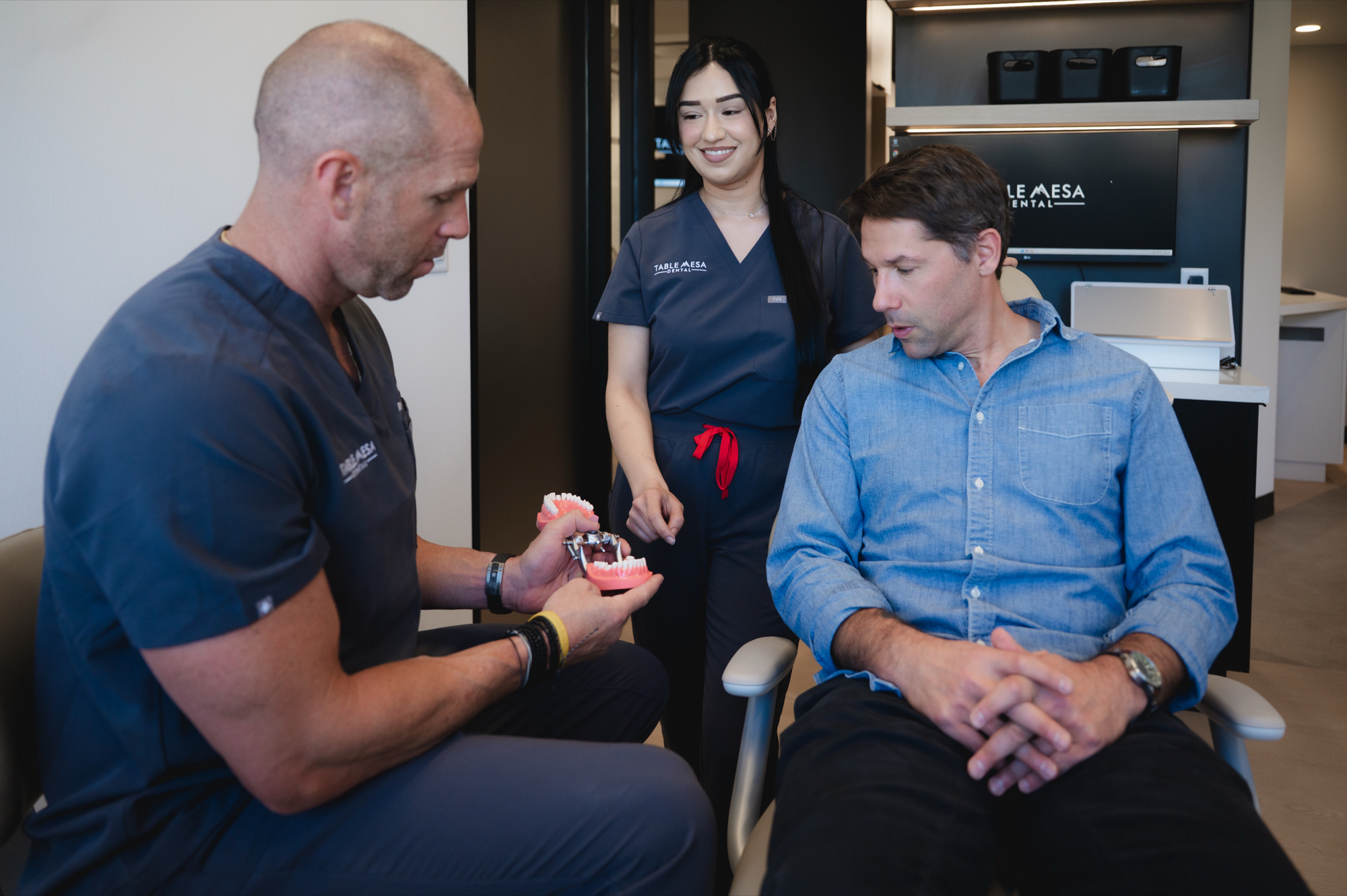
We start with a cone beam scan, a 3D X-ray of your jaw that shows exactly how much bone you have and where, down to the position of nerves and sinuses. Dr. K reviews it with you on screen and explains what the graft would accomplish. Sometimes the scan shows you have plenty of bone and no graft is needed at all.
2. Numbing and comfort
Before any work begins, the area is thoroughly numbed. If dental work makes your stomach drop, say so. Dr. K has advanced training in IV sedation, and we can also use nitrous oxide or an oral sedative so the appointment passes easily. See our sedation dentistry page for options.
3. Placing the graft material
We open a small area of gum tissue, clean the site, and pack in graft material that acts as a scaffold your own bone cells grow into. A protective membrane often goes over the top to keep the material in place. Then the gum is closed with sutures. Placement itself is usually quick.
4. Healing and new bone growth
Over the following months your body replaces the graft material with your own living bone. This is the part you can't rush. We check in with follow-up visits and a repeat scan when it's time to confirm the site is ready.
5. Moving on to the implant
Once the bone is solid, we place the implant. Because dental implants, oral surgery, and sedation all happen under one roof here, the move from grafting to restoring your tooth continues the same plan rather than starting over.
What Bone Grafting Does for You
- Makes implants possible. A dental implant needs bone to grip. Grafting turns "there isn't enough bone" into a workable plan, with enough support to bite into real food again.
- Protects the shape of your face. Jawbone shrinks after tooth loss, which shows up as a sunken look around the mouth and cheeks. Grafting helps hold that structure.
- Keeps neighboring teeth stable. Bone supports the teeth on either side of a gap, so preserving it helps them stay put.
- Improves how a denture fits. More bone ridge means less rocking and fewer sore spots, whether you wear a traditional denture or an implant-supported one.
- Buys back long-term options. A graft placed at the time of an extraction keeps the site healthy, so you can decide on an implant later without a bigger procedure.
Who's a Good Candidate
Bone grafting tends to be the right call if you've lost a tooth and want an implant, if a tooth is coming out soon and you'd like to preserve the site, if gum disease has eroded bone around your teeth, or if an upper back tooth site sits too close to the sinus for an implant to be placed safely.
It isn't automatic for everyone. Active gum infection needs treating first, so gum disease treatment usually comes before any grafting. Smoking slows bone healing, and we'll talk about that before scheduling. Certain medications and health conditions affect how bone heals, so bring your full medication list to the consult.
If grafting isn't a good fit, there are other ways forward. A bridge can replace a missing tooth without touching the bone. Dentures or implant-supported dentures may work with the bone you already have. Occasionally an implant can be angled to use available bone and skip grafting entirely. We'd rather point you toward the option that suits your mouth than push a procedure.
Timeline and What to Expect
- Consultation: one visit for imaging, exam, and a clear plan with numbers attached. Prefer to talk it through first? Reach out to our Boulder office.
- Graft appointment: typically one visit. Plan a low-key rest of the day. If dental work makes you anxious, ask about sedation options beforehand.
- First week: swelling and tenderness peak in the first two or three days, then ease. Most people return to work or class the next day.
- Suture check: a short follow-up in the first couple of weeks.
- Bone maturing: generally several months, depending on graft size and your own healing. Small socket grafts heal faster than larger reconstructions.
- Implant placement: after a new scan confirms the site is ready. More on how dental implants work once your bone can support one.
Preparing and Healing Well
Before: arrange a ride if you're having sedation, follow any eating instructions we give you, and pick up soft foods ahead of time.
The first few days: cold compresses help with swelling. Stick to soft, cool foods. Skip straws, smoking, and vigorous rinsing, since suction and pressure can dislodge graft material. Take medications as directed and sleep with your head slightly elevated.
The weeks after: brush gently around the site and keep the rest of your mouth clean as usual. Avoid chewing directly on the graft, and hold off on hard workouts and altitude-heavy hikes for a few days. We'd much rather hear from you early, so give us a call if something feels off before we move ahead with dental implants.
Cost and Payment
Grafting cost depends on how much bone is being rebuilt, the material used, whether a sinus lift is involved, and whether sedation is part of the plan. A small socket graft at the time of an extraction sits at one end of the range; a larger ridge reconstruction sits at the other. That's why we don't post a single price that would be wrong for most people.
What we do commit to is transparency. After your scan and exam, you'll get a written treatment plan with the actual figures. Including the cost of any dental implants the graft is preparing the site for. Before anything is scheduled. We accept many dental insurance plans and can help you understand what yours is likely to cover, we offer an in-house membership plan, and our team will go over payment options so the financial side is settled before the clinical side starts. Reach out to our Boulder office whenever you're ready to talk numbers.
Why Patients Choose Table Mesa Dental for Grafting
Dr. Ryan Koenig, DMD, has more than twenty years in dentistry with advanced training in implants, oral surgery, IV sedation, and full-mouth reconstruction. He earned his dental degree from Nova Southeastern University College of Dental Medicine and has logged over 1,000 hours of continuing education since. Patients know him as Dr. K, and his style is plain explanation followed by careful work.
Cone beam 3D imaging means the plan is based on measurements, not guesswork. Sedation from nitrous through IV is available in our own office. Grafting, implant placement, and the crown that eventually goes on top all happen in the same building with the same team, so nobody loses track of your case between offices.
Our team is culture-first on purpose. We want people from Table Mesa, south Boulder, and communities across Boulder County to walk in feeling like they've found their dental home, not like they're one item on a schedule.
Frequently Asked Questions
Does a bone graft hurt?
The appointment itself shouldn't hurt. The area is fully numb, and sedation is available if you'd like it. Afterward, expect soreness and swelling similar to a tooth extraction, manageable with medication and cold compresses. Most people find it easier than they expected.
Where does the graft material come from?
Options include processed donor bone, an animal source, synthetic material, or sometimes your own bone. Each behaves a little differently, and Dr. K will explain which one he's recommending and why during the consultation.
How long before I can get my implant?
Generally several months, since the graft needs to become your own mature bone before it can support an implant. Small grafts placed at extraction heal on the shorter end, and we confirm readiness with imaging rather than the calendar.
Can a bone graft fail?
Grafts succeed for the large majority of patients, but healing can fall short, most often when smoking, infection, or an unstable graft site gets in the way. If a site doesn't develop as expected, we'll let you know and talk through re-grafting or another route to replacing the tooth.
Do I need a graft if I'm getting an implant right after an extraction?
Sometimes, and often it's the easiest time to do it. Graft material placed into a fresh socket helps preserve the ridge while it heals, which can prevent a larger procedure later. Your scan and the socket itself will tell us.
Is a sinus lift the same thing as a bone graft?
It's a specific type. When upper back teeth are missing, the sinus cavity above can leave too little bone for an implant. A sinus lift adds graft material there to create the height needed, planned with cone beam imaging so the anatomy is clear beforehand.
Let's Find Out What Your Jaw Actually Needs
The only way to know whether you need grafting, how much, and what it will cost is to look. That's one appointment: images, an exam, and a straight conversation with Dr. K. You'll leave knowing where you stand, whether that means bone and sinus grafting first or moving ahead with dental implants on the timeline you already have in mind. If nerves have kept you from asking, we can talk through sedation options at the same visit.
Call us at (303) 590-3992 to set up a consultation at our office on South Broadway in Boulder. We're open Monday through Thursday, 8 to 4, and Fridays until 2.
Share
Your Story